
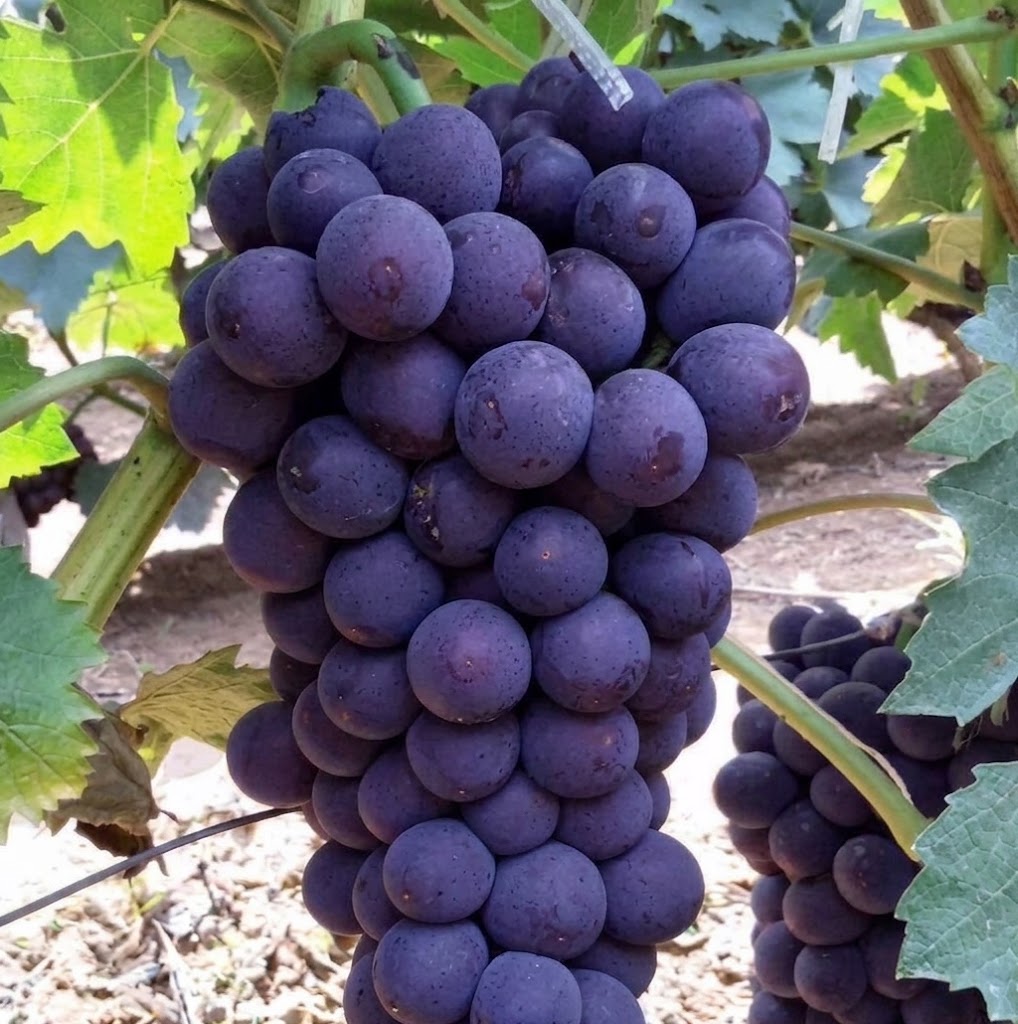

Description
It is an early-matriving, hybrid table grape variety (Euro-American cross). It was bred in 1981 by the Beijing Botanical Garden of the Institute of Botany, Chinese Academy of Sciences, from a seedlings selection of the ‘Heiaolin’ variety. It was officially named “Jingya” to commemorate the 11th Asian Games held in Beijing in 1990.
Key Characteristics
- Appearance: Large, oval-shaped berries cluster into conical or cylindrical bunches. The skin is a deep purple-black to blue-black, coated with a thick, natural powdery bloom. An average bunch weighs between 400 and 478 grams, with individual grapes weighing around 9 to 11 grams.
- Flavor & Texture: The flesh is soft, exceptionally juicy, and offers a balanced sweet-and-sour flavor profile with a subtle, strawberry-like aroma. It has a sugar content (soluble solids) ranging from 13.5% to 19.2%.
- Harvest Season: This is an early-season variety that ripens roughly 20 days earlier than the popular Kyoho grape. In the Beijing region, it generally matures between early and mid-August.
- Resilience: The vines are robust, exhibiting strong resistance to cold, humidity, and common grape diseases like downy mildew and powdery mildew.
- Alternative Names: It is also known commercially as Bandao No. 1, Xingnong No. 1, Fumin No. 1, Kaifeng, or Jingya No. 1.
Bare root shipping.


Reviews
There are no reviews yet.